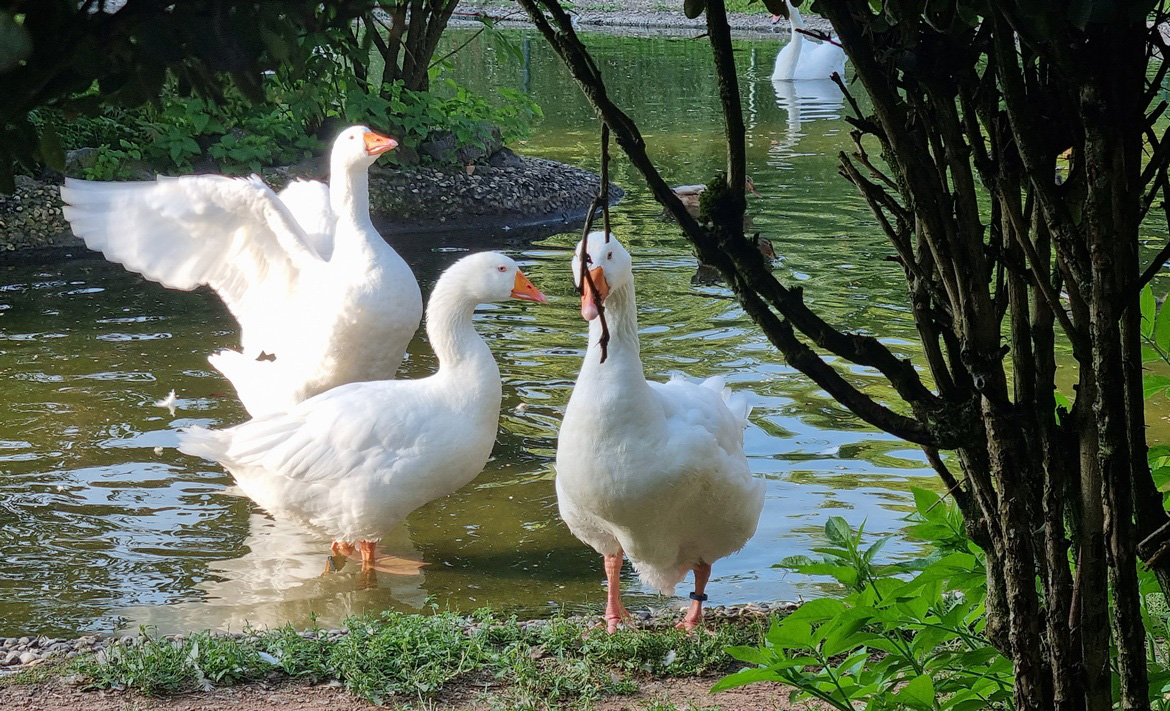
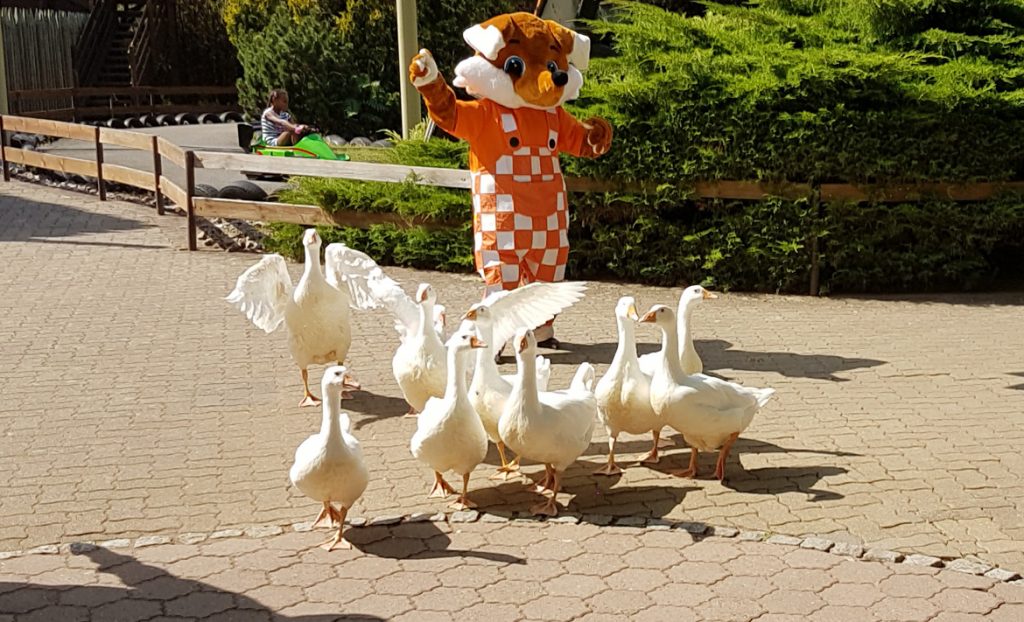
Domestic geese were domesticated from a wild goose: the greylag goose.
European geese have likely been domesticated in Egypt since the 3rd millennium B.C. Initially, this bird was considered sacred. Later, it was raised for its eggs and liver.
The Alsatian goose first appeared in the 1880s and was primarily used to produce foie gras. It was recognized as a purebred breed in 1920.
The “Poules et Oies d’Alsace Club de France” association has helped preserve the Alsatian goose in its three varieties: the gray goose, the white goose, and the “Pie cendrée” goose.